
Last updated November 2, 2026
 Sweep & inspection
 Caps & crowns
 Flue relining
 Masonry repair
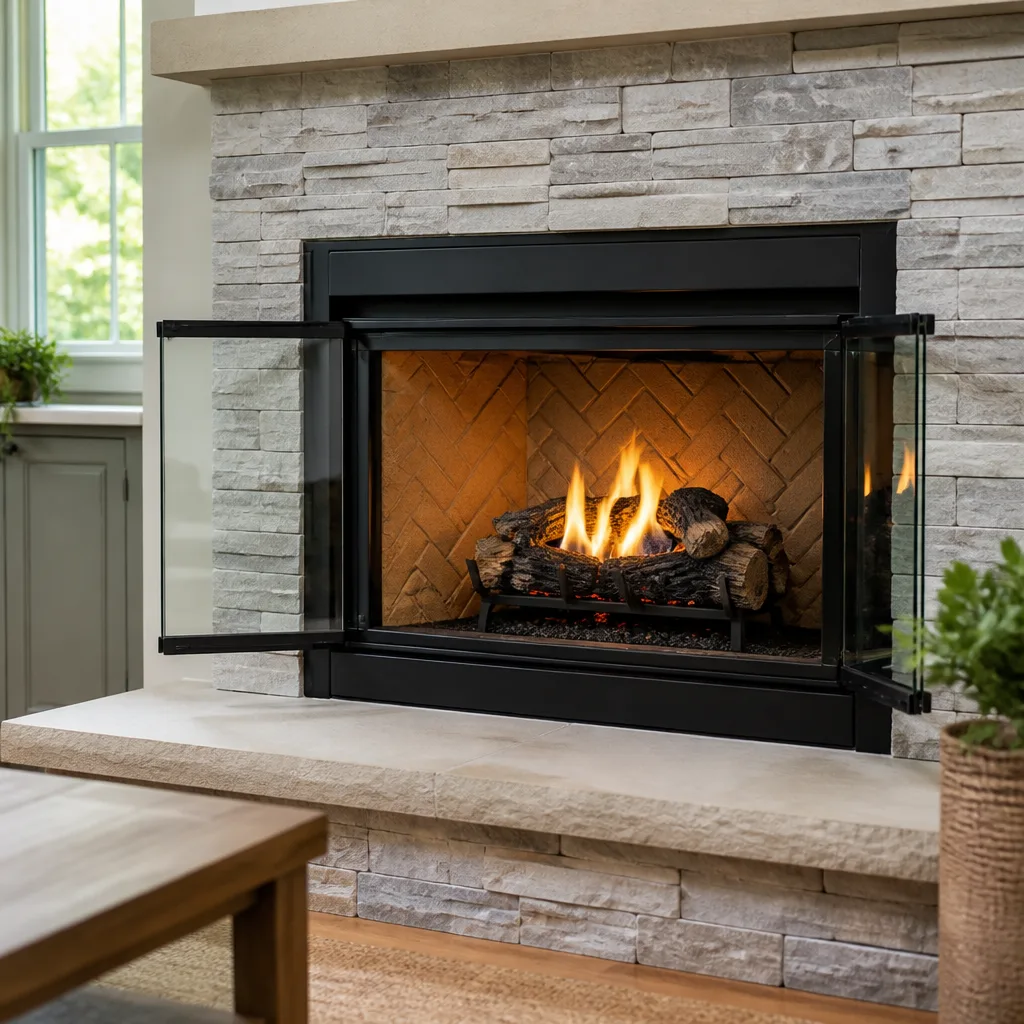 Gas fireplace service
Level 1 sweep and inspection to the NFPA 211 annual standard - flue, crown, cap, and flashing checked and photographed
Chimney sweep logs do not sweep chimneys. They loosen some creosote - which then falls where a brush and vacuum still have to collect it.
Chimney Sweep Maintenance Checklist for Berkeley Homeowners
The most common chimney fires we hear about in Berkeley aren’t caused by outright neglect. They’re caused by homeowners who thought they were maintaining their chimney but were checking the wrong things. A clean firebox doesn’t mean a clean flue. A cap that’s still attached doesn’t mean it’s doing its job. This guide gives you the same observational framework a trained Chimney Sweep uses when they walk up to a house in the Berkeley hills or the flats, so you can catch problems between professional visits and know exactly when something needs a second look.
Quick Answer
A chimney maintenance checklist for Berkeley homeowners comes down to three layers: a monthly visual check of the firebox and damper area, a seasonal check of what you can see from the ground outside, and an annual professional sweep and inspection that gets into the flue itself. Most homeowners can confidently monitor surface-level indicators like efflorescence, cap visibility, and draft quality, but anything involving the flue interior, crown condition, or liner integrity needs a trained eye and a camera – see our Chimney Sweep Troubleshooting: Common Problems and How to Fix Them for deeper guidance.
Styles & brands we work with
- Sweep & inspection
- Caps & crowns
- Flue relining
- Masonry repair
- Gas fireplace service
Table of Contents
- The Firebox Check: What to Look for Every Month
- The Roofline Check from the Ground: What Your Cap, Crown, and Brick Are Telling You
- The Draft Test: How Your Fire Performs Is a Diagnostic
- Cosmetic vs. Structural: Reading Mortar, Brick, and Efflorescence
- The Monthly Checklist: 15 Minutes, No Ladder
- The Seasonal Checklist: Before You Light the First Fire
- The Annual Professional Checklist: What a Sweep Actually Evaluates
- Berkeley-Specific Factors: Fog, Salt Air, and Older Housing Stock
The Firebox Check: What to Look for Every Month
The firebox is the part of the chimney you can reach without anything more than a flashlight and a willingness to crouch. It’s also the first place structural problems announce themselves. In our work across Berkeley, from Craftsman bungalows in South Berkeley to mid-century homes in the hills, we’ve learned that homeowners who check the firebox regularly catch issues before they become repairs.
Start with light. Shine a flashlight up from the firebox toward the damper and the throat of the flue. What you’re looking for is any change from the last time you looked. A new crack in the firebrick. A piece of mortar that wasn’t on the floor before. A rust-colored drip mark running down the back wall. Each of these is a signal, and they mean different things.
What to check in the firebox:
- Loose or spalled firebrick. Firebrick is designed to take heat, but it’s not indestructible. If a brick face has flaked off or a brick wiggles when you press it gently, the firebox is losing its protective layer.
- Mortar joints that have crumbled or receded more than a quarter inch. This allows heat to reach the structure behind the firebox, which is not built to take direct flame.
- Rust stains anywhere in the firebox or on the damper plate. Rust means moisture is getting in from somewhere – usually the cap, the crown, or the flashing – and that moisture is working its way down.
- Debris that wasn’t there before. Small piles of sandy material at the base of the firebox are often mortar or brick dust falling from higher up in the flue. Don’t ignore it.
- Shiny black creosote glaze on the firebox walls or damper. A thin layer of flat black soot is normal. A glossy, tar-like coating is stage three creosote and it’s a fire hazard that requires professional removal.
None of these observations require climbing anything or touching anything you shouldn’t touch. They’re observational. But they’re also specific enough to have a useful conversation with whoever does your next chimney sweep in Berkeley.
The Roofline Check from the Ground: What Your Cap, Crown, and Brick Are Telling You
You don’t need to get on the roof to learn a lot about your chimney. A pair of binoculars or a good phone camera zoom from the sidewalk or backyard will show you more than most homeowners expect. The cap, the crown, and the upper courses of brick all broadcast their condition if you know what you’re looking at.
Chimney Cap
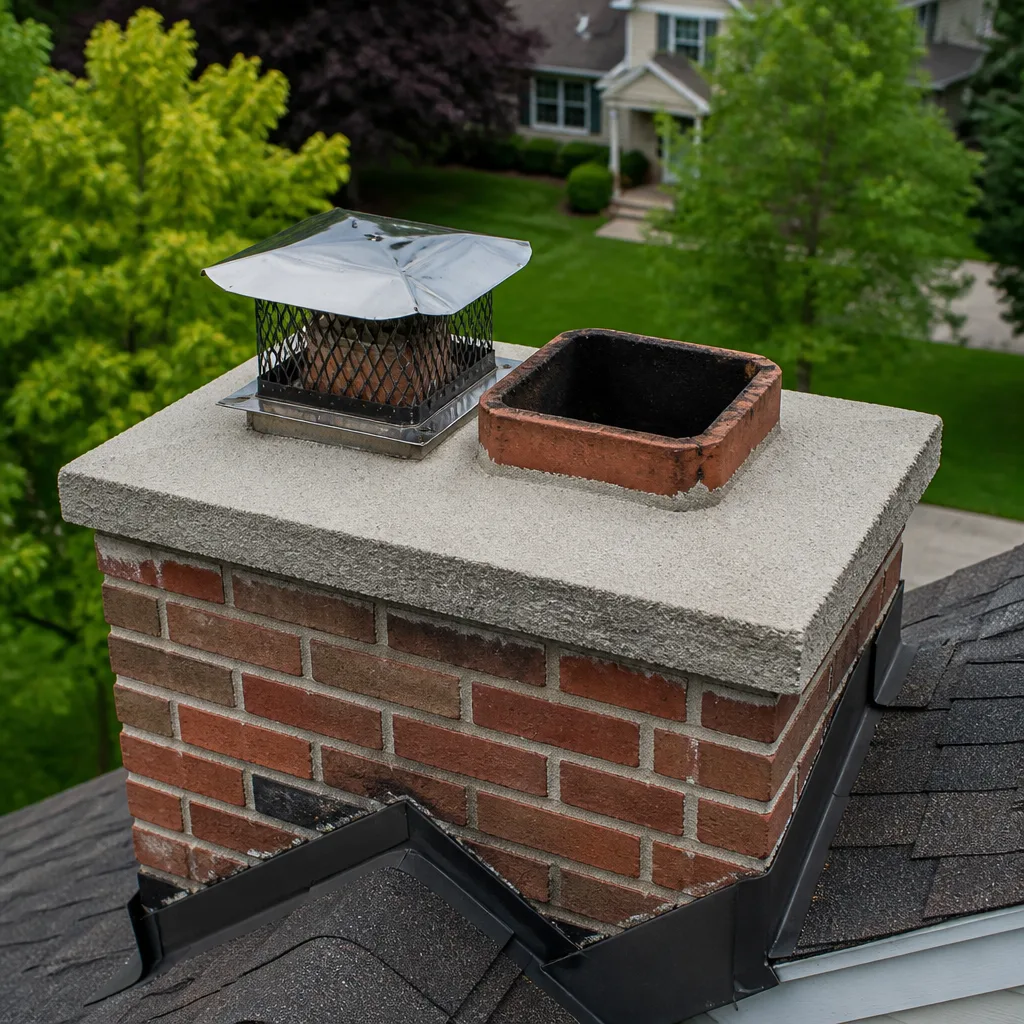
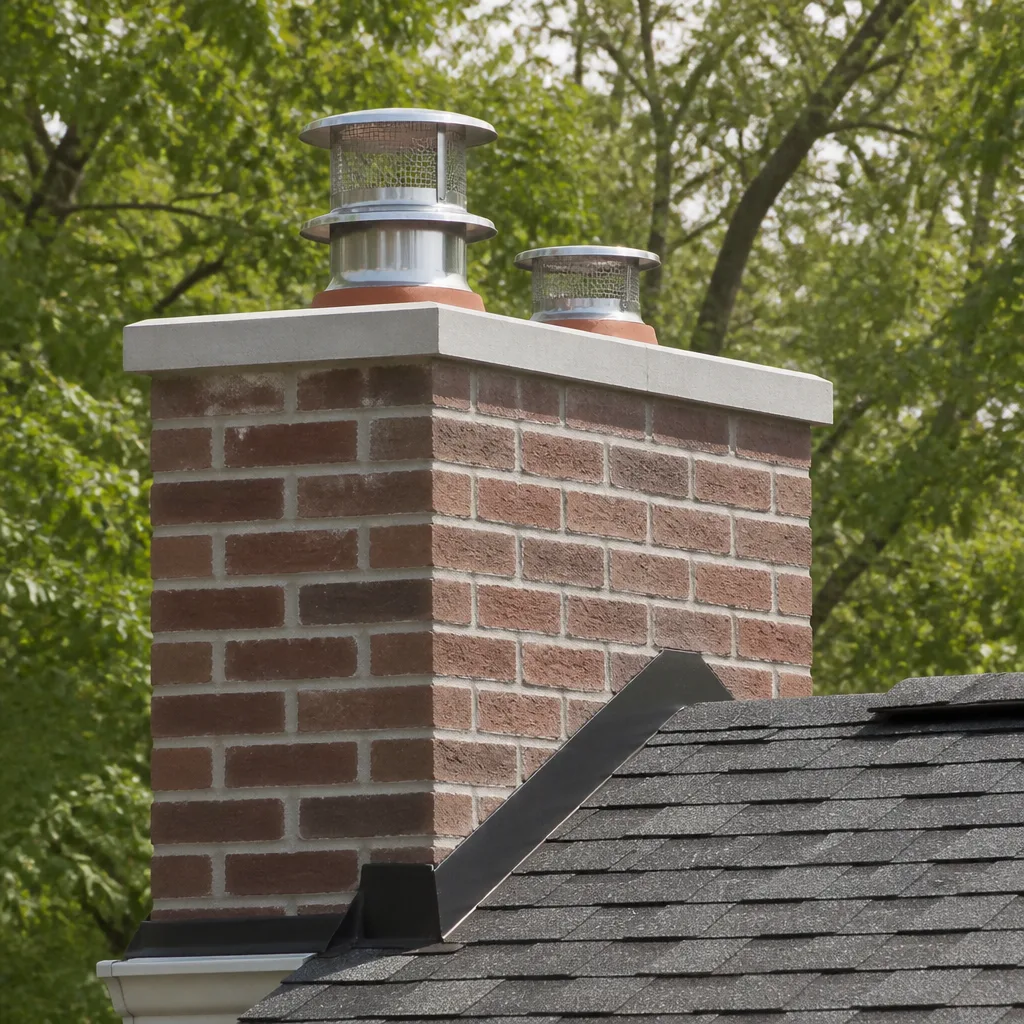
The cap is the metal umbrella (or occasionally stone or concrete) that sits over the flue opening. Its job is to keep rain, birds, squirrels, and leaves out while still allowing smoke and gases to exit. From the ground, check whether the cap is still sitting level, whether the mesh screening around its sides is intact, and whether there’s visible rust on its lid or mounting hardware.
A cap that’s shifted or rusted through at the mesh will let animals in. In Berkeley, raccoons and squirrels are persistent, and a missing cap screen is an open invitation. We’ve pulled nests out of flues in the Berkeley hills that filled the entire flue opening. A cap that’s doing its job prevents that.
Crown
The crown is the concrete or mortar slab that caps the chimney structure itself, with the flue pipe rising through it. It’s the flat surface you can sometimes see from the right angle. The crown should have a slight slope away from the flue and no visible cracks wider than a hairline. When a Berkeley chimney crown cracks – and fog cycles make this common – water gets into the chimney structure and works its way down through freeze-thaw cycles in the colder winter months. Even in Berkeley’s mild climate, moisture trapped in masonry expands and contracts enough to widen cracks year over year.
Upper Brick Courses
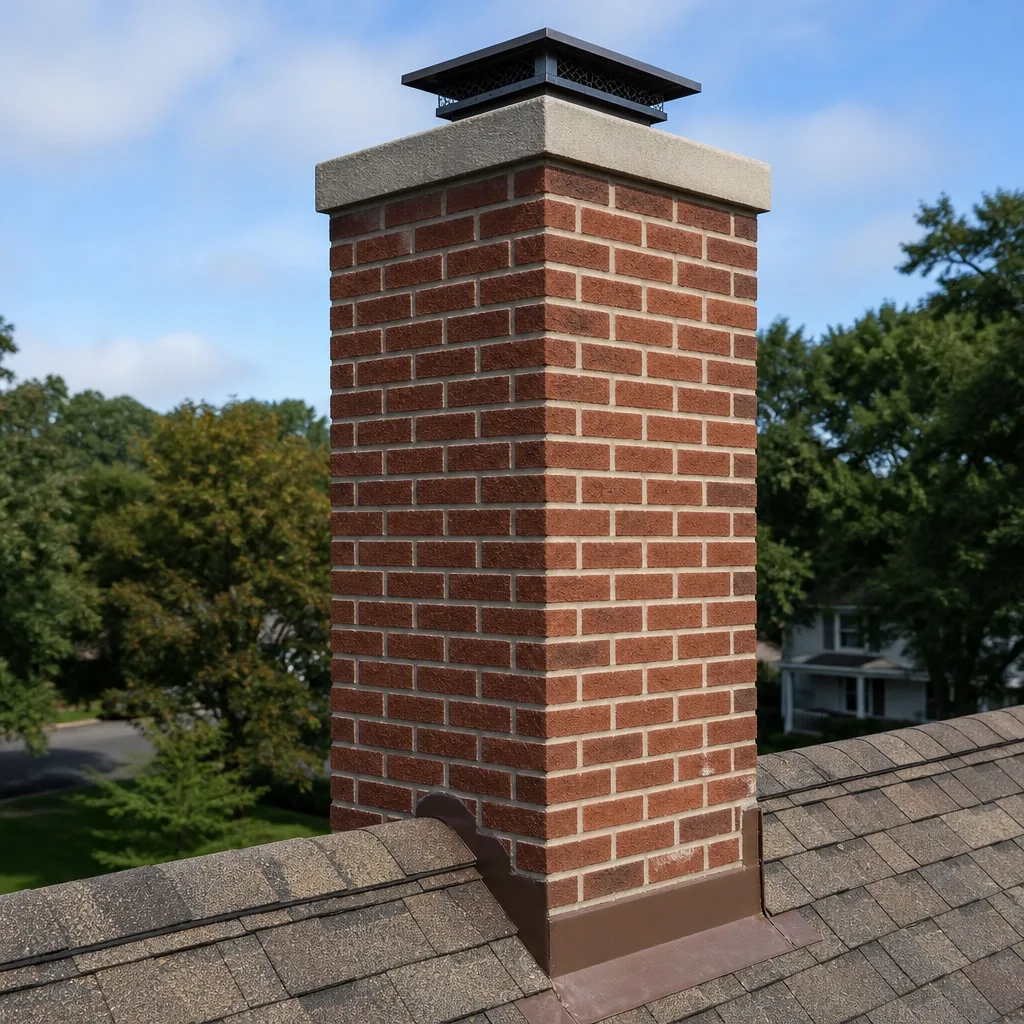
Look at the top foot or two of the chimney. This is the most exposed section, and it’s where deterioration shows up first. Check for bricks that look darker than the ones below them (water saturation), white crusty deposits on the face of the brick (efflorescence – more on this later), and any visible lean or bow. A chimney that leans is past the point of observational monitoring and needs a structural evaluation, which is squarely in the chimney repair in Berkeley category.
The Draft Test: How Your Fire Performs Is a Diagnostic
Here’s a functional test you can run without any tools beyond a working fireplace and a little patience. The way a fire draws tells you a lot about what’s happening inside the flue, and it’s a test most competing maintenance guides skip.
- Before you light anything, open the damper fully and hold a lit match or a piece of lit newspaper just inside the firebox opening, near the throat. Watch the smoke. If it drifts upward into the flue, the chimney has a natural draft. If it hangs in the firebox or pushes back into the room, you have a draft problem.
- Light a small fire with dry wood and watch the first ten minutes. A healthy chimney will draw steadily: flame leaning toward the back of the firebox, smoke moving upward cleanly. A chimney that struggles – smoke spilling into the room, flame dancing erratically – is telling you something.
- Open a window in the same room during the test. Berkeley homes, especially older ones that have been weatherized, can be tight enough that the fire can’t get combustion air. If the draft improves with the window open, the problem is air supply, not the chimney.
- Note any smell that lingers after the fire dies down. A strong, persistent smoky or campfire smell in the house, days after the fire, often indicates that creosote is deep enough in the flue to off-gas. That’s a cleaning signal, not a quirk.
Draft problems have causes: a clogged flue, a poorly designed flue-to-firebox ratio, a damper that isn’t opening fully, negative air pressure in the house, or a cap that’s too restrictive. A professional inspection can isolate which one it is. What you get from this test is the first signal that a problem exists at all.
Cosmetic vs. Structural: Reading Mortar, Brick, and Efflorescence
This is where most homeowner checklists fall apart. They fail to distinguish between a chimney that looks old and a chimney that’s actively deteriorating. Old is fine. Deteriorating is a problem. Here’s how to tell the difference from your own property in Berkeley.
Mortar Joints
The mortar between bricks is meant to be the sacrificial element of a masonry chimney. It erodes before brick does, and it’s designed to be repointed – that is, ground out and replaced. Cosmetic mortar wear looks like slightly recessed joints, no more than about an eighth to a quarter inch below the brick face, with no missing chunks. Structural mortar wear looks like joints that have crumbled to a depth of a half inch or more, bricks that are only connected at their corners, or missing mortar entirely between bricks.
If you can see gaps where mortar used to be and the chimney hasn’t been repointed in recent memory, the structure is weakening. Berkeley’s fog and winter raincycles accelerate this. Repointing is a repair that a qualified chimney company can scope, and it’s dramatically cheaper than rebuilding a chimney that’s been allowed to degrade beyond salvage.
Brick Faces
Spalling is the technical term for the face of a brick flaking off or popping loose. It’s caused by water penetration and expansion. If the bricks at the base of your chimney, near the roofline, or around the crown are spalling, that’s structural. The brick is no longer doing its job as a weather surface, and it will continue to break down. A spalled brick here and there is repairable. Widespread spalling means that section of chimney has to be rebuilt.
Efflorescence
That white, chalky deposit you might see on the chimney face is efflorescence: mineral salts left behind when water moves through the masonry and evaporates. Efflorescence that appears once and brushes away is cosmetic. Efflorescence that returns repeatedly, or appears alongside cracked joints and spalling, means water is actively moving through the chimney structure. In Berkeley, where the fog keeps things damp for part of the year, this is worth keeping a close eye on.
The Monthly Checklist: 15 Minutes, No Ladder
This is a list of things you can check from inside the house or from the ground; for more guides & resources, explore our blog. It requires nothing more than a flashlight, binoculars or a phone camera, and the patience to actually look. No climbing. No tools. No touching anything hot or fragile.
- Shine a light up the firebox toward the throat and damper. Note any new debris, rust, creosote glaze, or loose material.
- Check the firebox floor for sand-like mortar dust or brick flakes that weren’t there before.
- Inspect the damper to see if it opens and closes fully without sticking, and look for any rust or warping on the plate or hinges.
- Walk the perimeter outside and look at the chimney from two or three different angles. Note any visible changes in brick color, white mineral deposits, or material that looks like it has shifted.
- Look at the cap with binoculars or a zoomed phone photo. Confirm it’s seated level directly over the flue and that its mesh sides look intact.
- Run the draft test with a lit match or paper before any fire, and note any backdraft or sluggish smoke movement.
- Smell the room where the fireplace lives. A persistent soot or smoke odor when you haven’t burned anything in a while is worth investigating.
Fifteen minutes a month catches most of the problems a sweep would otherwise find for the first time at an annual appointment. The value here is the comparison from one month to the next: you spot changes, not just conditions.
The Seasonal Checklist: Before You Light the First Fire
Berkeley’s burning season runs roughly from late October through March, give or take a fog-heavy shoulder on either end. What we hear from homeowners in the Berkeley hills and across the flats is the same rhythm each fall: the first cold snap arrives, they open the damper, strike a match, and hope for the best. A seasonal checklist replaces that with a process.
- Do a full monthly checklist first – everything above, including the draft test, before the first fire of the season.
- Check for animal activity. Birds, squirrels, and raccoons will try to get into the chimney during the months when it’s not in use. Listen for scratching sounds, look for nesting material visible from the firebox or the cap, and check for new debris in the firebox.
- Confirm the cap is still in place and not blocked. Leaves from Berkeley’s mature oaks and eucalyptus can pile up on a cap or get through a compromised mesh screen. If you can’t see the cap clearly from the ground, mention it to your sweep.
- Run a small, hot fire and watch the draft for the first 30 minutes. A chimney that drew perfectly last year may not this year. Bird nests, creosote shedding, and moisture damage all change the interior geometry.
- Schedule your annual sweep and inspection before the season is already underway. Most Berkeley homeowners wait until November or December. If you schedule in August or September, you’re in before the rush, and any problem found gets fixed before it’s cold enough to matter.
The Annual Professional Checklist: What a Sweep Actually Evaluates
Once a year, in the fall, the chimney needs a professional inspection and cleaning. The National Fire Protection Association recommends an annual inspection of all chimneys, regardless of how often they’re used. A sweep’s checklist is longer and more consequential than the homeowner version because it’s the only time the flue interior is actually seen.
What gets checked at an annual sweep and inspection:
- The flue interior. A camera inspection or a mirror scope reveals creosote buildup, liner cracks, separated flue tiles, and obstructions that can’t be seen any other way. This is the single most important part of the visit.
- Creosote thickness and stage. Creosote comes in three stages, from flaky soot to hard glaze. The stage determines the cleaning method and whether a standard sweep is sufficient.
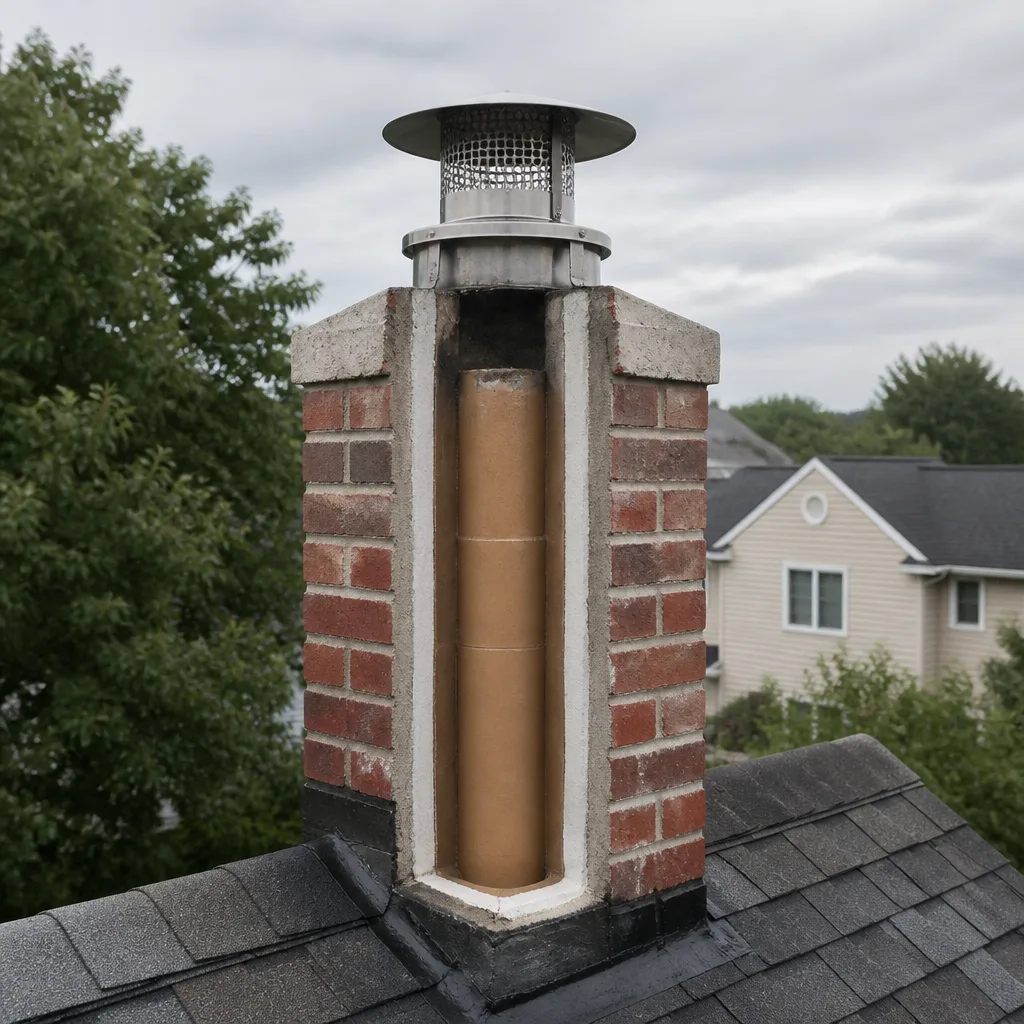
- The liner. Terra cotta liners age, crack, and spall. A stainless liner like the DuraFlex systems we work with is a durable replacement, and we evaluate each liner’s condition with the camera before recommending any path.
- The crown and cap. But this time from the roof, up close, where hairline cracks and rust-through are visible. Brands like Copperfield and Famco make caps and dampers we install when the existing components have failed.
- The damper. It should seat fully, open without binding, and not let conditioned air escape up the flue when closed.
- The firebox and smoke chamber. The smoke chamber shoulders the transition from firebox to flue, and it’s a common site of hidden creosote accumulation and cracked masonry.
- The flashing and roofline penetration. The metal that seals the chimney to the roof is a frequent source of leaks. A sweep checks this because it’s part of the chimney system, even though it’s not inside the chimney.
Where a maintenance checklist for Berkeley homeowners ends, a professional inspection begins: the flue interior, the smoke chamber, and the liner are not accessible to anyone standing in the living room. That’s the annual touchpoint. Everything else in this guide is about being a sharp observer between those visits.
Berkeley-Specific Factors: Fog, Salt Air, and Older Housing Stock
Berkeley’s climate is not hard on chimneys the way a Midwestern freeze-thaw cycle is, but it has its own set of conditions that influence what you should watch for. Morning and evening fog keeps masonry damp for more hours of the day than homeowners realize, especially in the flats and near the bay. That persistent moisture gets into hairline cracks and small mortar gaps. The result is slow, continuous erosion rather than dramatic seasonal damage.
Salt air is a factor for Berkeley homes closer to the marina and West Berkeley. It accelerates rust on metal components: caps, dampers, flashing, and liner sections. A cap that might last fifteen years further inland may fail in ten or twelve near the water. The inspection schedule doesn’t change – annual is still annual – but the expectation for metal component life does.
The housing stock matters too. Much of Berkeley’s residential architecture dates from the early to mid-20th century. That means masonry chimneys that have seen 80 to 100 years of service, often with original terra cotta liners. Those liners were built to a standard of their era, and they’ve been absorbing heat, moisture, and creosote conditioning for decades. On older Berkeley homes, we’ve found cracked liners in chimneys that looked fine from the outside and even from the firebox. Only the camera knew. This is why the annual check matters more, not less, on an older home.
For Berkeley homeowners who want the full Chimney Sweep Berkeley home resource, we’ve built a complete guide to what a professional visit includes and what questions to ask. And if the chimney is clean but the dryer vent hasn’t been addressed, know that both are fire hazards worth handling together. Our dryer vent cleaning in Berkeley service covers that side of the house too.
Common Mistakes to Avoid
- Cleaning only the firebox and calling it maintenance. The firebox is what you can see. The flue is what you can’t. A clean firebox has no bearing on creosote buildup three stories up inside the flue.
- Assuming the cap is fine because it’s still attached. A cap can be attached and still be failing: rusted mesh, damaged lid, shifted position. “Still attached” is not a condition assessment.
- Waiting until there’s a visible problem to call a sweep. The most expensive chimney repairs we handle in Berkeley are the ones that went unseen for years. By the time a problem is visible from the ground, it’s usually advanced.
- Ignoring a draft that’s “always been that way.” A fireplace that has always smoked or always smelled is not quirky. It’s telling you something. The fix is usually simpler than homeowners expect.
- Burning unseasoned or damp wood. Berkeley’s fog and coastal moisture make properly seasoned firewood harder to come by than people assume. Wet wood creates more creosote, faster. This is a controllable variable and one of the most common contributors to heavy buildup.
- Treating the chimney and the dryer vent as completely unrelated systems. They’re both venting appliances that move heated air and combustion byproducts out of the house. Both accumulate lint or creosote. Both are fire hazards if ignored. Handling them in one visit is more efficient than hiring two separate contractors, which is exactly why our team covers both.
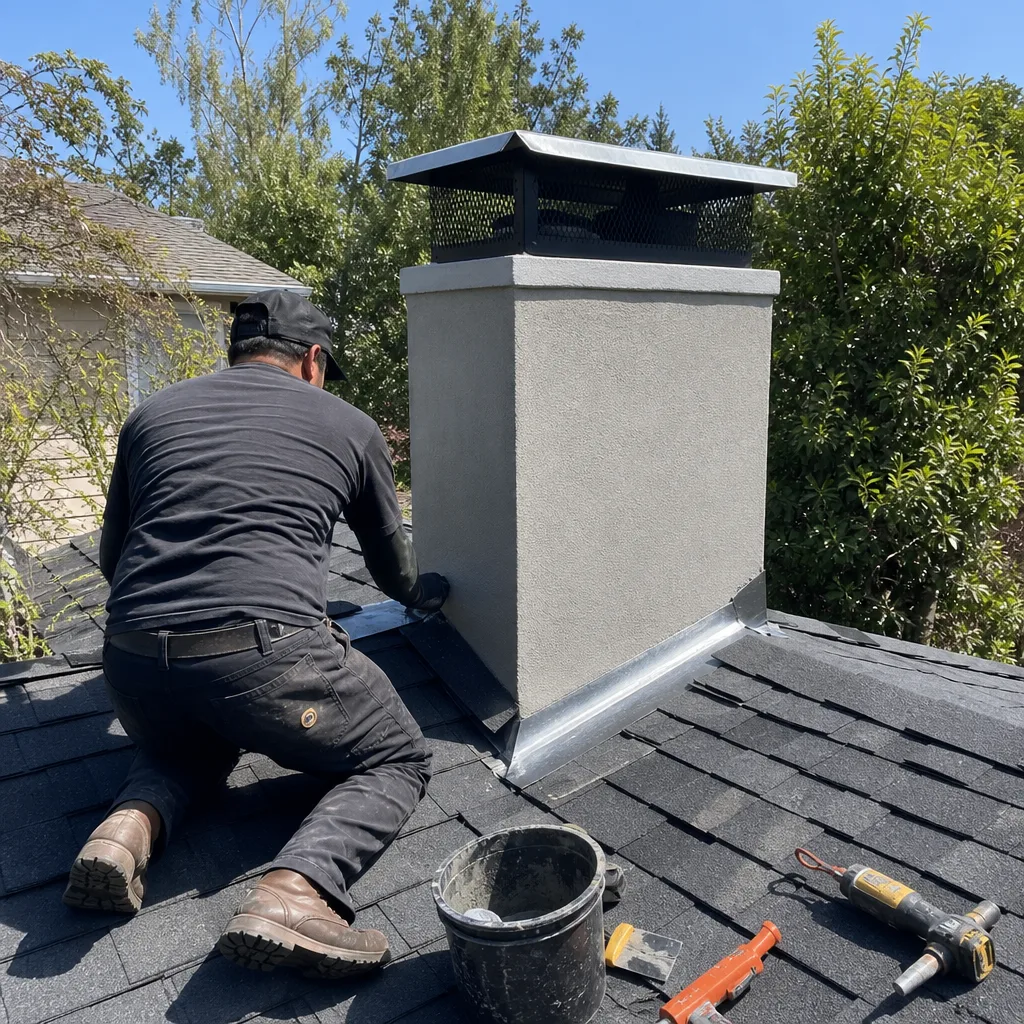
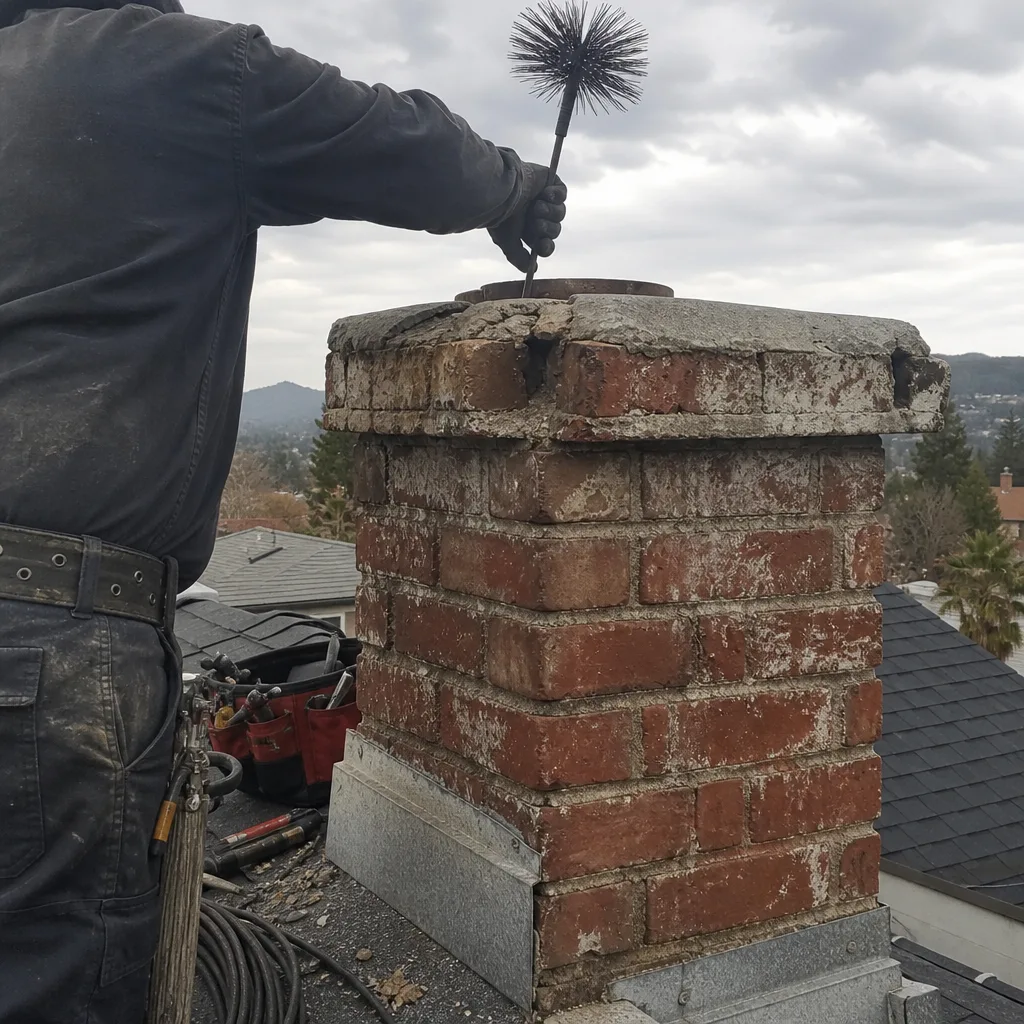
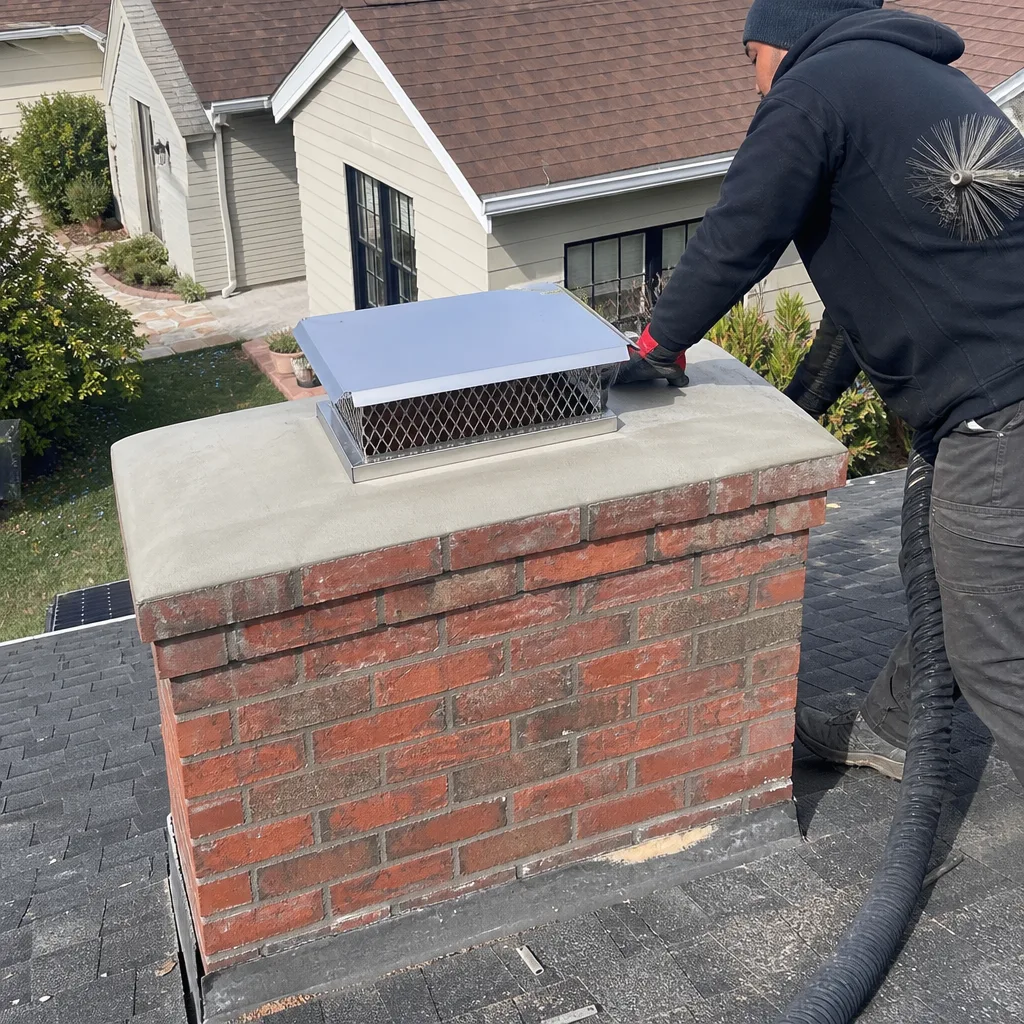
See the difference
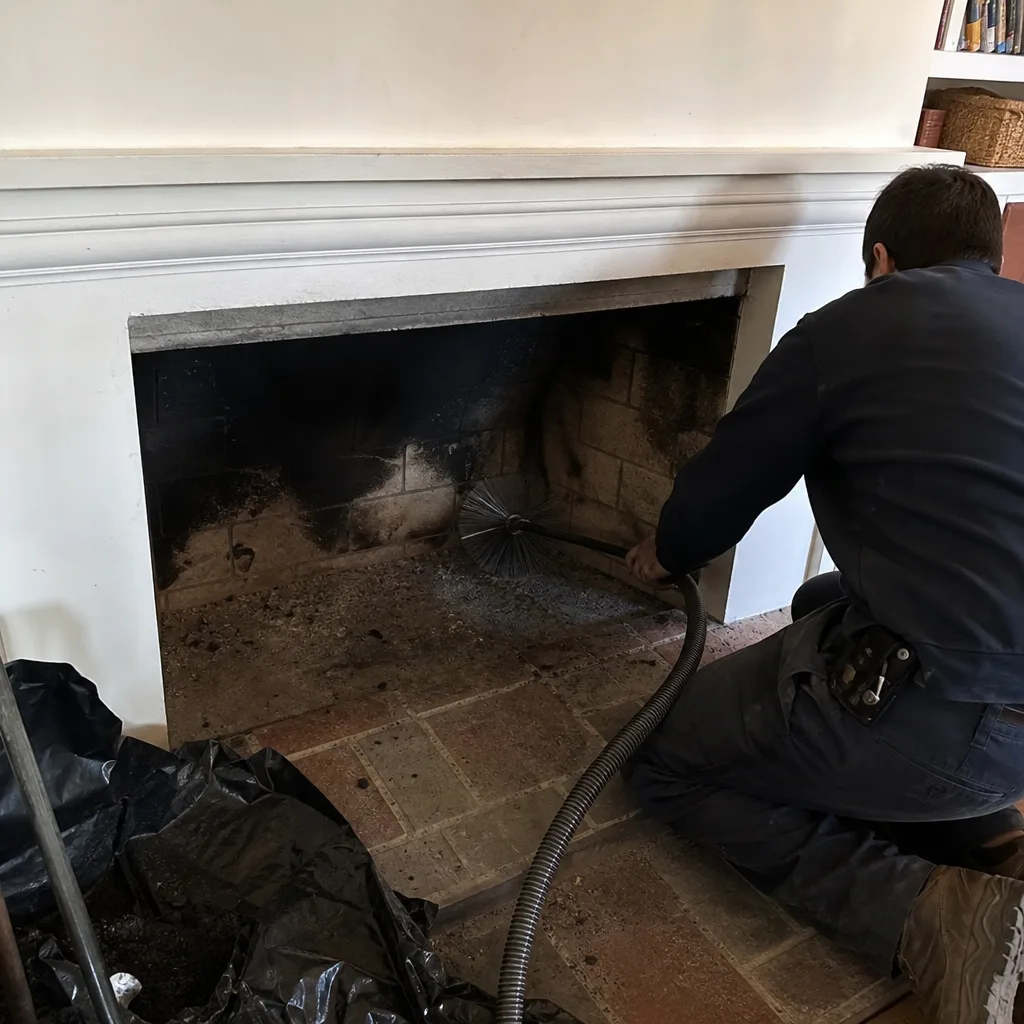 Before
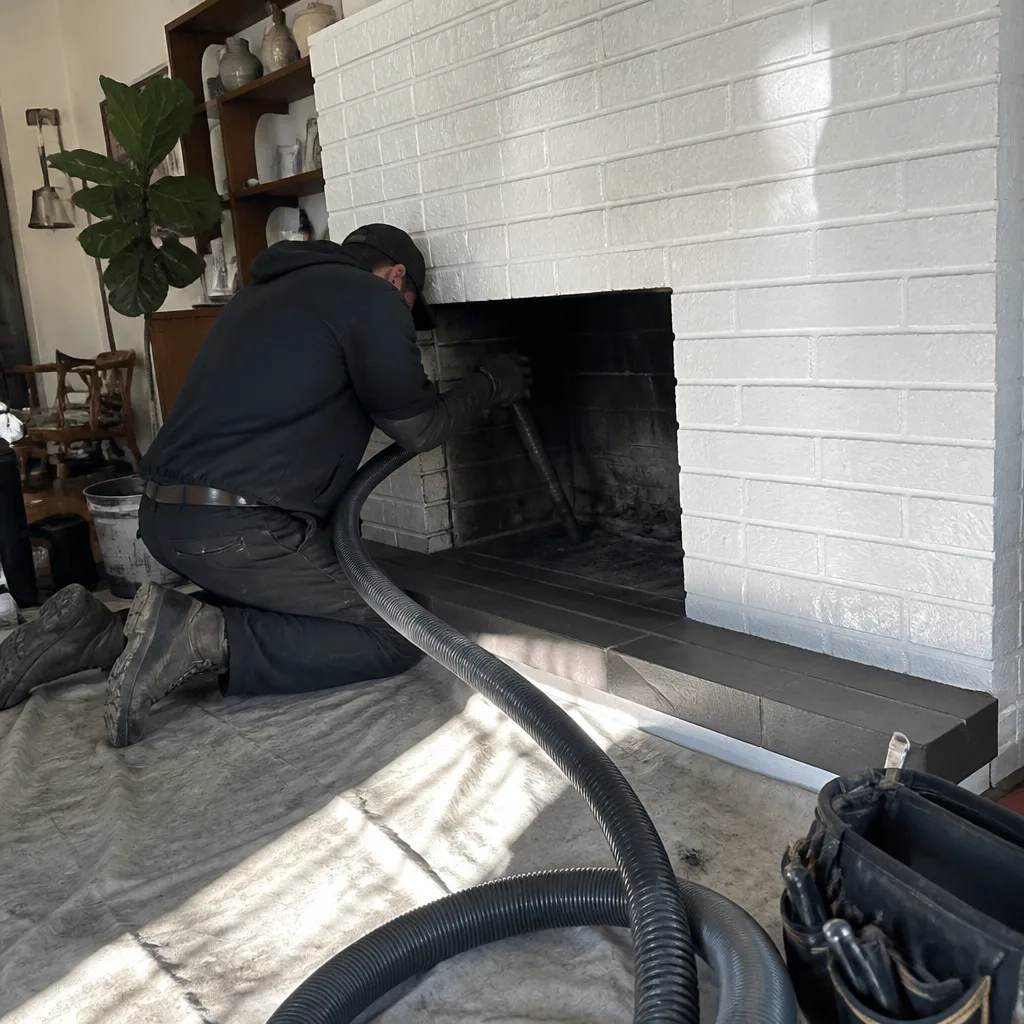 After
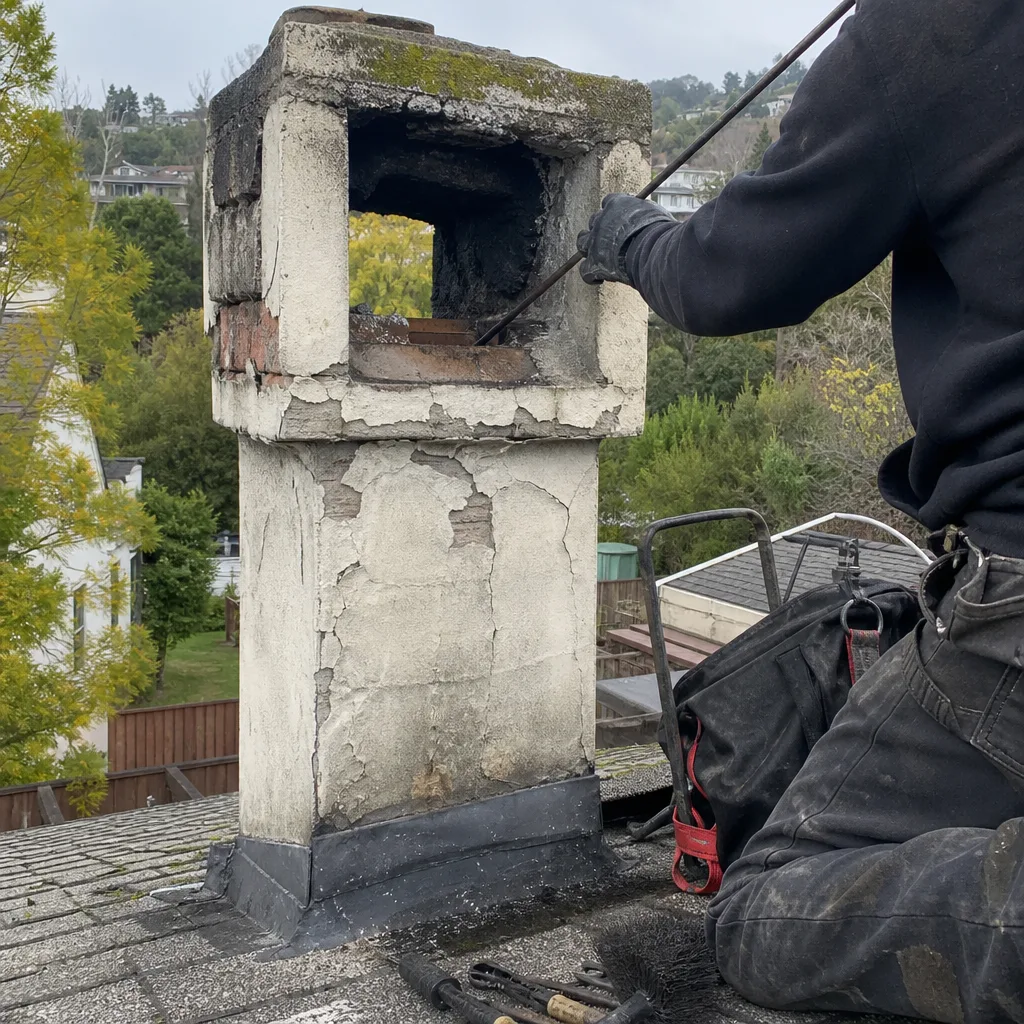 Before
 After
 Before
 After
When to Call a Professional
Some things on this checklist are yours to monitor. Others are ours to evaluate. Call a chimney sweep when you see spalling brick, deep mortar erosion, a cap that’s visibly compromised, persistent draft problems that don’t improve with an open window, or any debris that keeps appearing in the firebox. If you smell a strong smoky odor that never quite leaves, that’s a call too. If you see glaze-like creosote anywhere in the firebox or damper area, do not light another fire until it’s been professionally evaluated. A chimney sweep in Berkeley can inspect what a homeowner can’t see. If you’re in Berkeley and want a professional evaluation, Chimney Sweep Berkeley offers free estimates in Berkeley – call (855) 382-9432. We work with the brands chimney professionals trust – see our Choosing the Right Chimney Cleaning Brand: A Buyer’s Guide for Berkeley for details on DuraFlex, HeatShield, Gelco, Olympia Chimney, Famco, and Copperfield. That matters because the repair that’s recommended after an inspection should be installed with materials that are built for the job, not whatever a generalist had on the truck.
Frequently Asked Questions
Every year, regardless of how much you burn, per National Fire Protection Association guidance. Berkeley homeowners who use the fireplace more than twice a week during the burning season may need an additional mid-season check if creosote is building faster than expected. The standard is annual; the actual need depends on burn frequency, wood quality, and flue condition.
A professional maintenance check includes a visual assessment of the firebox, damper, smoke chamber, flue interior (usually by camera), liner, crown, cap, and flashing. The flue is then swept to remove creosote and any obstructions. A homeowner-level check covers the firebox, damper, outside brick, and the visible condition of the cap from the ground. The difference is access and equipment.
In Berkeley, a standard chimney sweep and inspection typically falls between $180 and $350, depending on the flue’s accessibility, creosote stage, and whether additional services like camera inspection or cap replacement are needed. That’s a Berkeley-market range, and it reflects the cost of doing thorough work, not just showing up with a brush. Call (855) 382-9432 for an exact quote on your chimney – estimates are free.
Maybe not. Most flues don’t need a new liner. When a liner is compromised but structurally intact, a HeatShield resurfacing can restore the flue without a full replacement, and we present that option when it’s appropriate. The way you know you’re not being upsold is the camera footage: no one should recommend a liner replacement without showing you images of the existing liner’s condition. Ask to see it. We tell you what we found, not what sells the biggest job.
Creosote continues to accumulate, animals may nest in the cap or flue, and small cracks or moisture problems widen undetected. If you’re lucky, the only consequence is a heavier cleaning job the following year. If you’re not, a chimney fire or a carbon monoxide backdraft make themselves known in ways you’d rather avoid. The risk is cumulative, not linear.
The lint trap catches what the dryer’s filter grabs. What gets past it – fine lint particles and restricted airflow – builds up inside the vent run itself. That’s not visible from the laundry room, and it’s the material that causes most dryer-related fires. The lint trap and the vent are two different parts of the system. Call (855) 382-9432 to schedule both the chimney and the dryer vent in one Berkeley visit.
The Bottom Line
A maintenance checklist is only worth the attention you give it. The monthly check is about noticing change: new debris, new stains, new cracks, a fire that draws differently than it did last month. The seasonal check is about being ready before you need the fire, not after the first cold night. The annual professional check is the one that actually sees inside the flue, and everything else is a supplement to that, not a replacement. Berkeley homeowners deal with fog, salt air, and aging housing stock, all of which mean the chimney deserves a few minutes of your attention and a qualified sweep once a year. If you want help with the chimney, contact Chimney Sweep Berkeley for a free estimate.
Written by the team at Chimney Sweep Berkeley, serving Berkeley since 2015.